Dreaming About Cats – Hidden Instincts, Desire, and Quiet Power
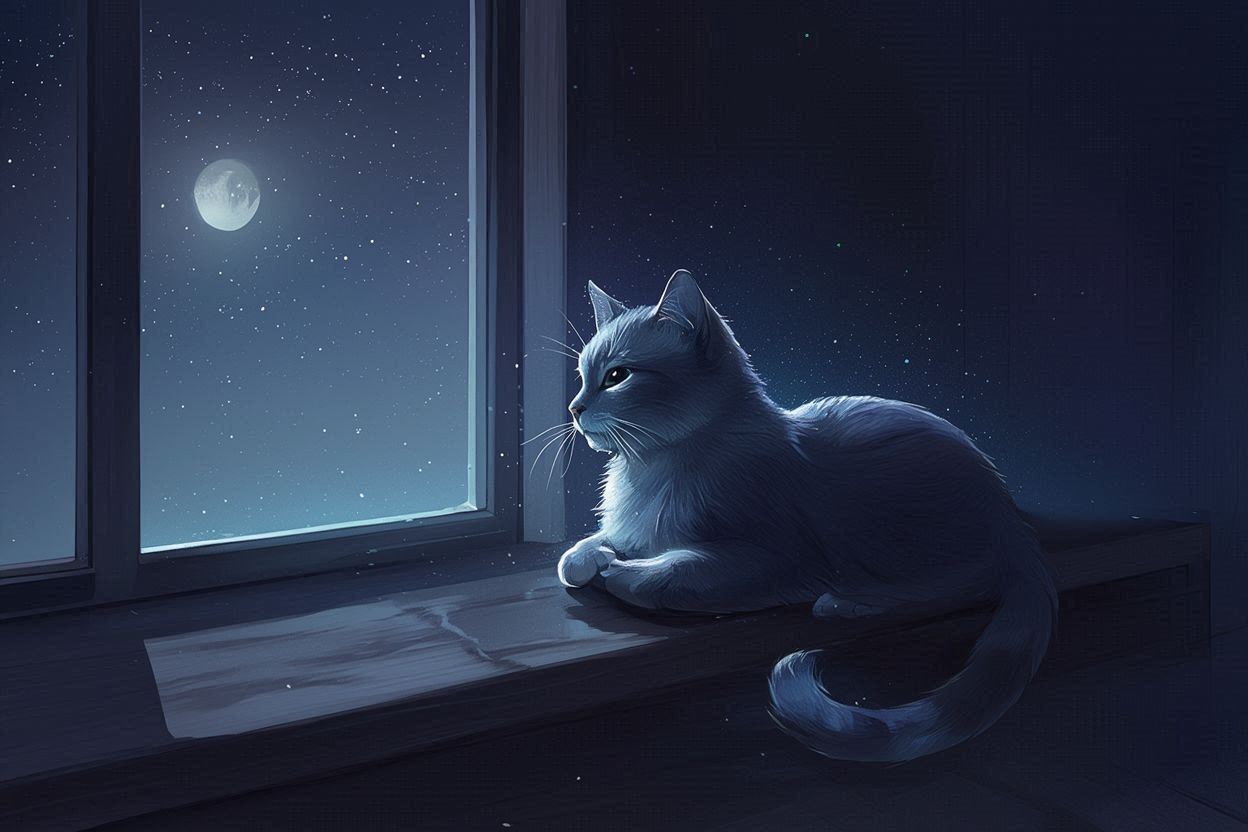
Table of Contents
Dreams about cats tend to linger. Unlike louder symbols—storms, falling, or being chased—a cat in a dream often appears quietly, watching, moving on its own terms. Yet beneath that calm presence lies something deeply personal. Cats in dreams rarely represent external chaos; instead, they point inward, toward instinct, sensuality, boundaries, and the parts of yourself that resist control.
Whether the cat is affectionate, aggressive, distant, or strange, its behavior often mirrors how you relate to independence, intimacy, and your own inner desires. These dreams are less about what is happening to you—and more about what is quietly awakening within you.
General Meaning of Cats in Dreams
At a broad level, cats symbolize autonomy, intuition, and subtle power. Unlike dogs, which often represent loyalty and external relationships, cats point toward self-reliance and inner life. Dreaming of a cat can suggest that you are navigating a situation where independence matters—emotionally, sexually, or psychologically.
Cats also carry a strong connection to sensuality. Their movements are deliberate, soft, and controlled, often reflecting a person’s relationship with physical pleasure, attraction, and boundaries. A cat appearing in your dream may indicate a growing awareness of your own desires—or discomfort with expressing them.
There is also an element of unpredictability. Cats are affectionate one moment and distant the next. This duality can reflect uncertainty in your life, especially in relationships where emotional closeness fluctuates or feels difficult to fully trust.
Meaning Depending on Dream Context
The behavior of the cat—and your reaction to it—significantly shapes the interpretation.
- A friendly or affectionate cat: This often points to comfort with your own emotional and sensual nature. You may be accepting your need for closeness while still maintaining independence. It can also reflect a relationship where intimacy feels safe and mutual.
- An aggressive or attacking cat: This suggests tension around boundaries. You may feel that someone is intruding on your personal space, or that your own desires feel “dangerous” or difficult to control. In some cases, it reflects suppressed anger or sexual frustration that is surfacing indirectly.
- A distant or observing cat: A cat that watches but does not approach can symbolize emotional detachment. You might be holding back from intimacy, or observing your own feelings without fully engaging with them. It can also reflect a person in your life who feels emotionally unavailable.
- A wounded or sick cat: This can indicate neglect of your own needs—particularly emotional or sensual ones. You may be ignoring exhaustion, repressing desire, or disconnecting from your body’s signals.
- A cat entering your home: This suggests something personal crossing into your inner world. It may represent a new emotional or sexual awareness, or a person who is beginning to affect you on a deeper level than expected.
- Multiple cats: Seeing many cats can point to overstimulation—too many emotional or sensual influences at once. It may reflect confusion, temptation, or a feeling of being pulled in different directions, especially in romantic or social contexts.
Even small details matter. A calm environment versus a chaotic one, your emotional reaction, or whether the cat feels familiar—all of these subtly shift the meaning toward either harmony or internal conflict.
Psychological Interpretation
Psychologically, cats in dreams often represent the parts of the self that resist structure and control. These are instincts that do not respond well to logic—desire, curiosity, attraction, and emotional withdrawal.
If you tend to be highly disciplined or rational in waking life, a cat may appear as a counterbalance. It embodies spontaneity, pleasure, and unpredictability—qualities that your conscious mind may suppress. In this sense, the dream is not random; it is corrective.
There is also a strong connection to intimacy patterns. A cat’s behavior—approaching, retreating, scratching, or purring—can mirror how you navigate closeness. For example, if the cat alternates between affection and aggression, it may reflect ambivalence about intimacy: wanting closeness, but fearing vulnerability.
On a deeper level, cats can symbolize self-worth tied to desirability. Because cats are often associated with elegance and sensual presence, dreaming of them may reveal how you perceive your own attractiveness or how you believe others perceive you. A confident, relaxed cat suggests ease with this aspect of identity, while a fearful or hostile cat may indicate insecurity or internal conflict.
Interestingly, recurring cat dreams sometimes appear during periods of personal transformation—especially when someone is redefining their boundaries or exploring new aspects of identity, including sexuality.
Symbolic and Spiritual Interpretation
Symbolically, cats have long been associated with mystery, independence, and the unseen. In many traditions, they are linked to intuition and the ability to move between different states—light and dark, known and unknown.
In dreams, this can translate into heightened awareness. A cat may represent your intuitive voice—quiet, observant, and easily ignored if you are too focused on external noise. If the cat is trying to get your attention, it may suggest that you are overlooking subtle signals in your waking life.
There is also a sensual-spiritual dimension. Cats often symbolize embodied awareness—the connection between physical sensation and inner knowing. In this sense, dreaming of a cat can point to a need to reconnect with your body, not just your thoughts. This includes acknowledging pleasure, attraction, and instinct as valid forms of insight rather than distractions.
In some interpretations, cats are seen as guardians of personal space. A cat appearing in a dream may signal that your boundaries—emotional or sexual—are being tested, and that you need to reclaim control over who or what you allow into your inner world.
Less Common or Intriguing Variations
Certain cat dreams carry more unusual meanings that can feel surprisingly specific.
- A cat that speaks or behaves like a human: This can represent an inner voice becoming more conscious. Often, it reflects thoughts or desires that you are beginning to acknowledge openly, especially those related to identity or attraction.
- A cat following you persistently: This may indicate a desire or instinct that you are trying to ignore. The more persistent the cat, the more likely it is that something important is being pushed aside in waking life.
- Transforming into a cat: This rare but powerful variation suggests a shift in identity. It can reflect a desire for freedom, sensual expression, or escape from rigid roles. It may also indicate growing comfort with independence and self-directed pleasure.
- A cat staring directly at you: This often feels intense or unsettling. It can symbolize self-awareness—specifically, seeing parts of yourself that are usually hidden. This may include desires, fears, or instincts that you do not usually confront directly.
One particularly interesting insight is that cats in dreams often appear during periods of subtle emotional change rather than major life events. Unlike dramatic symbols, they tend to mark quiet shifts—like becoming more aware of your needs, your attraction to someone, or your discomfort in a situation that once felt acceptable.
Another less obvious pattern is the link between cats and “controlled vulnerability.” Cats choose when to be close and when to withdraw. Dreaming of them can reflect a desire to experience intimacy without losing autonomy—a balance that is often difficult to achieve consciously.
Conclusion
Dreaming about cats is rarely accidental. These dreams point toward instinct, independence, and the nuanced space between connection and control. They often reflect how you relate to your own desires—whether you embrace them, suppress them, or feel uncertain about their place in your life.
The meaning becomes clearer when you consider how the cat behaved and how you felt in its presence. Was it comforting, threatening, distant, or curious? In many cases, the cat is not just a symbol—it is a reflection of how you move through intimacy, boundaries, and self-expression.
Paying attention to these details can reveal something subtle but important: not what you are doing, but what you are beginning to feel—and whether you are ready to follow that instinct or still holding it at a distance.