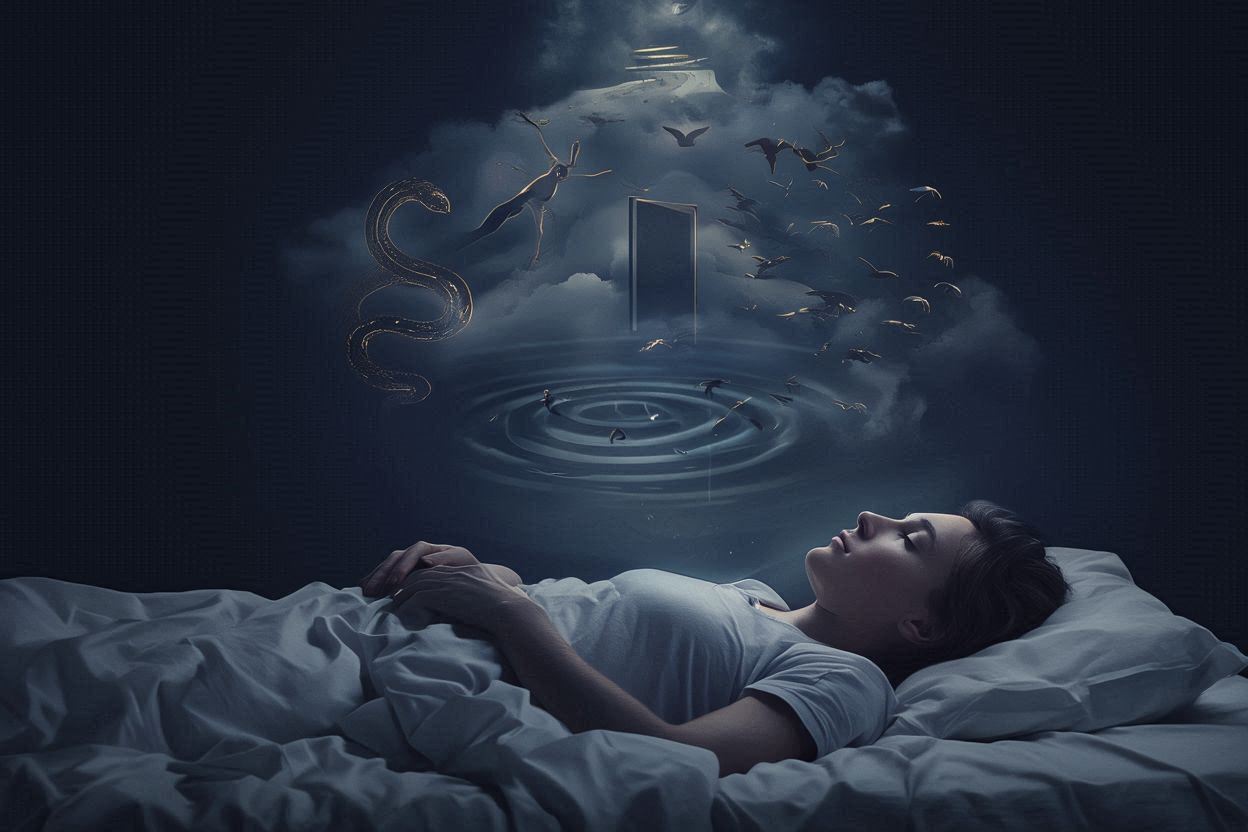
Dreaming of a Bird — Meaning and Interpretation

Table of Contents
Dreams about birds often feel vivid, sometimes even strangely personal. A bird can appear peaceful, distant, trapped, or unpredictable—and each version carries a slightly different emotional tone. While birds are usually associated with freedom, not every bird dream is uplifting. In many cases, they quietly reflect inner tension, unspoken fears, or a desire to escape something that feels limiting in waking life.
To understand a bird dream, it helps to look beyond the image itself and focus on what the bird was doing, how you felt, and what seemed just out of reach. These small details often reveal more than the bird alone.
General Meaning
At a basic level, a bird in a dream represents movement between states—between control and freedom, thought and action, or safety and risk. Birds exist in the space above the ground, which makes them natural symbols of perspective, ideas, and emotional distance.
However, the meaning shifts depending on how the bird behaves. A calm bird may suggest a desire for peace or clarity. A chaotic or aggressive bird can point toward internal unrest or external pressure. A bird that cannot fly—or refuses to—often reflects something within you that feels blocked, restrained, or unfinished.
Emotionally, bird dreams often emerge during periods when you’re trying to “rise above” something but haven’t fully resolved what’s underneath. This creates a subtle tension: part of you wants distance, while another part remains tied to the situation.
Meaning Depending on Dream Context
The context of the dream shapes its interpretation more than the bird itself. Small differences in setting or behavior can significantly alter the meaning.
If the bird is flying freely, it may reflect a desire for independence or mental clarity. But if you feel anxious while watching it, this freedom might not feel like yours—it may represent something you fear losing or cannot control.
A bird in a cage often points to restriction. This can relate to a job, relationship, or internal expectation that limits your natural instincts. If you are the one who placed the bird in the cage, the dream may be highlighting self-imposed pressure or fear of taking risks.
Injured or grounded birds tend to reflect vulnerability. This could be your own emotional state or concern for someone else. These dreams often appear during periods of exhaustion, burnout, or unresolved stress.
If a bird is attacking or behaving aggressively, it may symbolize intrusive thoughts or a situation that feels overwhelming. The unpredictability of the bird mirrors a lack of control in waking life.
Hearing birds without seeing them can be especially interesting. This often points to awareness without clarity—you sense something is off or changing, but you cannot yet identify what it is.
Psychological Interpretation
From a psychological perspective, birds often represent thoughts—particularly those that feel distant, repetitive, or hard to ground. A bird circling overhead can mirror rumination, where your mind keeps returning to the same unresolved issue.
Dreams of birds may also appear when you are trying to maintain emotional distance. Instead of confronting a problem directly, you observe it from above, like a bird watching from the sky. While this can create temporary relief, it may also prevent deeper resolution.
There is also a link between bird dreams and performance pressure. Birds are often associated with grace and precision in motion. If the bird in your dream struggles to fly or behaves erratically, it can reflect fear of failure or anxiety about not meeting expectations.
Another layer involves control. Birds are difficult to contain, and this unpredictability can trigger subconscious tension. If you try to catch or control a bird in your dream, it may reflect a real-life attempt to manage something inherently uncertain—such as emotions, outcomes, or other people’s behavior.
Interestingly, recurring bird dreams sometimes appear during periods of decision-making. They can signal hesitation: a part of you is ready to move forward, while another part remains cautious, even resistant.
Symbolic and Spiritual Interpretation
Symbolically, birds have long been associated with messages, transitions, and the connection between different levels of awareness. In dreams, they often represent something trying to “rise” into your conscious understanding.
A bird moving upward can symbolize aspiration or growth, but it can also indicate avoidance—rising above a problem instead of addressing it directly. The direction of movement matters. A descending bird may suggest that something abstract or emotional is becoming more immediate and unavoidable.
Spiritually, birds are sometimes seen as carriers of insight. However, this does not necessarily mean clarity or comfort. The message may be subtle or even unsettling, especially if the bird behaves in an unusual way.
The type of bird can also add nuance. For example, darker birds may reflect hidden fears or unresolved tension, while lighter or more colorful birds can point toward curiosity, creativity, or distraction. The emotional tone of the dream is more important than traditional symbolism—how the bird made you feel is often the key.
An unusual but meaningful insight is that birds in dreams sometimes reflect “borrowed perspectives.” You may be seeing a situation through someone else’s expectations rather than your own instincts. This can create a subtle sense of disconnection, even if everything appears fine on the surface.
Less Common or Interesting Variations
Some bird dreams stand out because they feel slightly off or difficult to explain. These variations often carry deeper psychological significance.
A bird that watches you closely can feel unsettling. This may reflect self-awareness turning into self-criticism—feeling observed, judged, or evaluated, even when no one is actually doing so.
If the bird speaks or behaves almost like a human, the dream may be externalizing an internal dialogue. In other words, the bird becomes a voice for thoughts you have not fully acknowledged.
A silent or motionless bird can point to emotional stagnation. Something that should be active or expressive feels paused or suppressed.
Another interesting variation is dreaming of too many birds at once. A large flock can symbolize overwhelm—too many ideas, responsibilities, or pressures competing for attention. This often appears during periods of mental overload or scattered focus.
Finally, a bird that disappears suddenly can reflect instability or fear of loss. This doesn’t always refer to something tangible—it can also relate to a feeling, opportunity, or sense of direction that seems to vanish without warning.
Conclusion
Dreaming of a bird is rarely just about freedom or escape. More often, it reflects a complex balance between control and release, awareness and avoidance. The way the bird behaves—and how you respond to it—can reveal underlying tension, quiet anxiety, or unresolved thoughts that haven’t yet found a clear expression.
Instead of focusing only on what the bird represents, consider what feels unfinished in the dream. That subtle discomfort or curiosity is often where the most meaningful insight lies.